A reverse exchange quote that just says "we can park the property" skips the part that actually determines whether the structure makes sense: what the exchange accommodation titleholder charges in fees, financing costs, and holding costs while it holds title, and how those stack on top of the qualified intermediary's own fee.
What a 'we can park it' quote leaves unpriced
Under a reverse exchange, an exchange accommodation titleholder holds either the replacement or the relinquished property while the investor's sale or purchase catches up. That arrangement is not free, and the costs go beyond a flat parking fee — financing the parked property often requires a separate loan at a higher rate than a conventional purchase loan, insurance has to cover a property in an unusual ownership structure, and property taxes and maintenance accrue during the parking period with no tenant income offsetting them if the property is vacant.
These costs compound the longer the parking period runs. A reverse exchange that resolves in thirty days costs meaningfully less than one still parked at day one hundred fifty, and a quote that does not model both scenarios is not giving the investor a real picture of the structure's economics.
Why Charlotte's banking-driven office and finance deals lean reverse
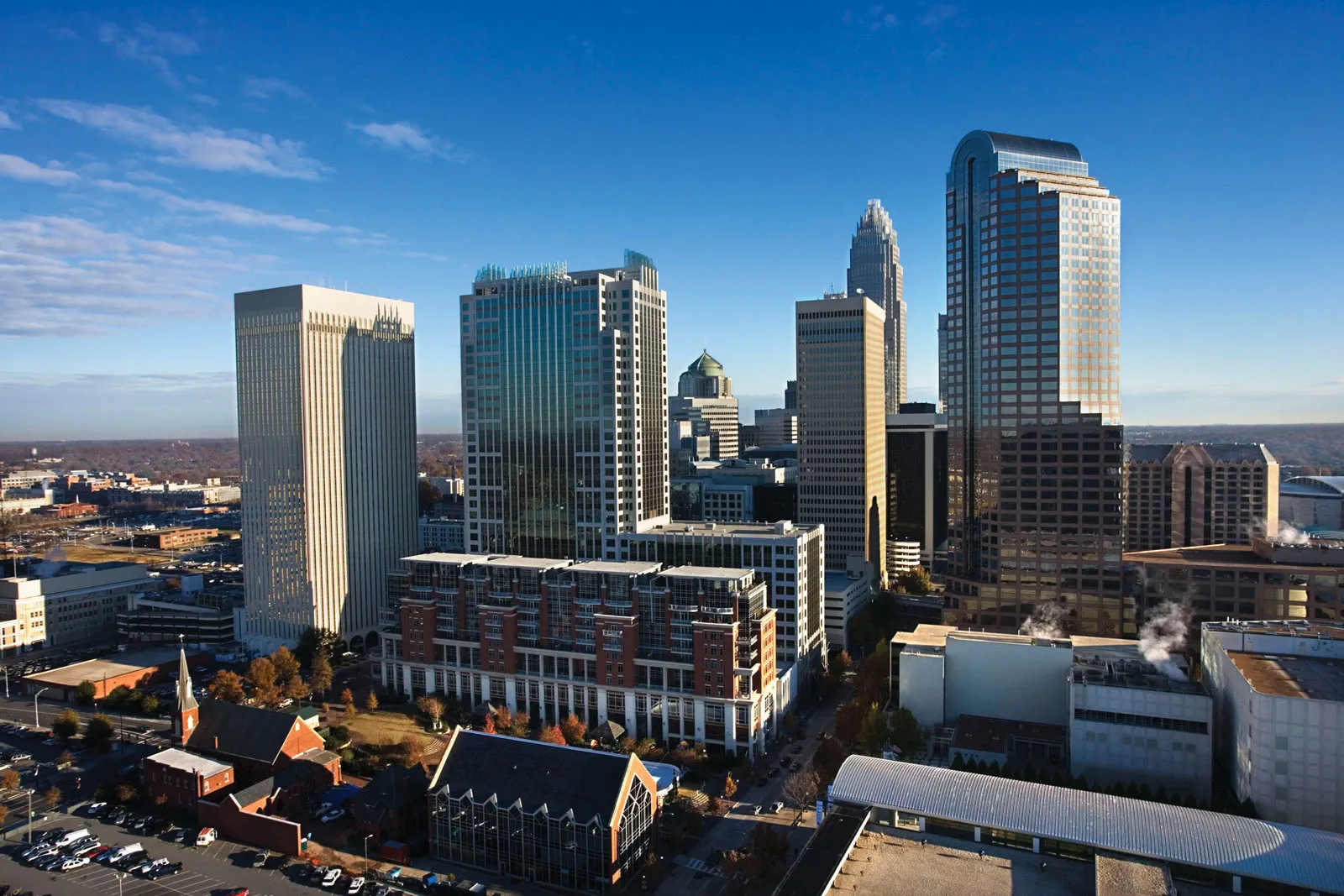
Charlotte's office and finance-adjacent property market moves on a calendar set largely by large regional and national banking employers, and a seller of a well-leased office or bank-branch asset in that market often has more than one buyer competing at once. An investor exchanging out of an apartment or industrial asset elsewhere in the state and into a Charlotte office or finance-sector building frequently cannot afford to let that seller wait for a relinquished-property closing to catch up, which is exactly the situation a reverse exchange is built to solve.
Financing the parked leg of one of these deals adds its own wrinkle. A lender underwriting a bank-branch or corporate-office replacement property will look closely at tenant credit and lease term before extending a parking loan, and a reverse structure involving a single-tenant finance-sector building can take longer to finance than a straightforward multifamily parking arrangement. Building that financing timeline into the reverse exchange plan from the outset keeps the accommodation titleholder's carrying period from running longer than the deal's economics can absorb.
Why North Carolina's fast-moving submarkets push investors toward this structure
Beyond Charlotte, Triangle sellers in a competitive listing often will not wait for a buyer's relinquished sale to close first either. New construction and build-to-suit opportunities around these growth corridors carry the same pressure, since a builder rarely holds a completed asset open-ended for one buyer's exchange timeline.
Slower-moving markets, including many county-seat and rural properties across the state, put less pressure toward a reverse structure, since a seller there is often more willing to work around a buyer's sale timeline. The decision to use a reverse exchange should follow from the actual competitiveness of the specific deal, not from a blanket assumption about how exchanges are supposed to work.
Cost and structure questions before committing to a reverse exchange
Before an investor commits to a reverse structure, the coordination work should lay out, in writing:
- The exchange accommodation titleholder's full fee schedule, beyond only the base parking fee
- Financing terms and rate for the parking period compared against a conventional acquisition loan
- Estimated holding costs — taxes, insurance, and maintenance — for both a fast and a slow resolution scenario
- How the QI's fee and the accommodation titleholder's fee interact, since they are often separate charges
- For a finance-sector or single-tenant office parking arrangement, how tenant credit affects the parking loan terms
- The 180-day outside deadline for completing the exchange once the reverse structure begins
A quote that skips any of these is pricing only the easy part of a reverse exchange.
How this coordination fits alongside the QI and lender
A reverse exchange involves more moving parts than a standard forward exchange — the accommodation titleholder, the QI, the lender financing the parked asset, and often a separate set of closing documents for the parking arrangement itself. Coordinating these parties from the start keeps the accommodation titleholder's paperwork from becoming a bottleneck once the investor is ready to complete the exchange.
This service does not act as the qualified intermediary or the accommodation titleholder, and it does not provide tax advice. It keeps those parties, the lender, and closing counsel working from the same cost and timeline picture.
What an unpriced reverse exchange costs an investor later
An investor who enters a reverse structure without a clear cost estimate can find the accommodation titleholder's fees and financing costs eating a meaningful share of the deal's expected return, particularly if the parking period runs long. That outcome is avoidable with a cost model built before the structure is chosen, not after.
The goal of this coordination is not to discourage reverse exchanges, which solve a real timing problem in competitive markets such as Charlotte's finance-driven office corridor. It is to make sure the investor chooses the structure with the actual costs in view, rather than the convenience alone.
Common 1031 Exchange Questions
What costs does a typical reverse exchange quote leave out?
Financing terms for the parking period, holding costs during that period, and how the accommodation titleholder's fee stacks with the qualified intermediary's fee. Most quotes mention only a flat parking fee.
Why would a North Carolina investor choose a reverse exchange over a forward exchange?
Competitive Charlotte or Triangle sellers, or new construction sellers, often won't wait for a buyer's relinquished sale to close first. A reverse structure lets the investor secure the replacement property before that sale finishes.
Does this coordination service act as the accommodation titleholder or QI?
No. It coordinates between the investor, the accommodation titleholder, the qualified intermediary, and the lender. It does not hold title or exchange funds itself.
How long can a property stay parked in a reverse exchange?
The full exchange, including the parking period, must complete within 180 days. Costs generally increase the longer the property remains parked, which should factor into the decision to use this structure.
Is a reverse exchange ever the wrong choice?
It can be, particularly for a slower-moving deal where the seller would have worked around the buyer's sale timeline anyway. The added fees and financing costs of a reverse structure should be weighed against the actual competitiveness of the specific transaction.
Why does a Charlotte finance-sector office parking deal take longer to finance?
Lenders underwriting a bank-branch or corporate-office replacement property weigh tenant credit and lease term closely, and a single-tenant finance-sector building can take longer to finance than a multifamily parking arrangement.